


From coastal security missions and border surveillance to disaster response and rescue operations, today’s operators are required to work in environments where conventional marine platforms were never designed to perform efficiently. Beaches, flooded urban areas, marshlands, estuaries, rocky coastlines, and infrastructure-denied zones have become critical operational theaters for military, governmental and emergency response agencies worldwide.
Yet most conventional boats still rely on the same fundamental operational model: access through ports, ramps, docks, or protected launch areas.
This dependency creates major operational limitations precisely where rapid intervention matters most.
THE OPERATIONAL LIMITS OF CONVENTIONAL BOATS
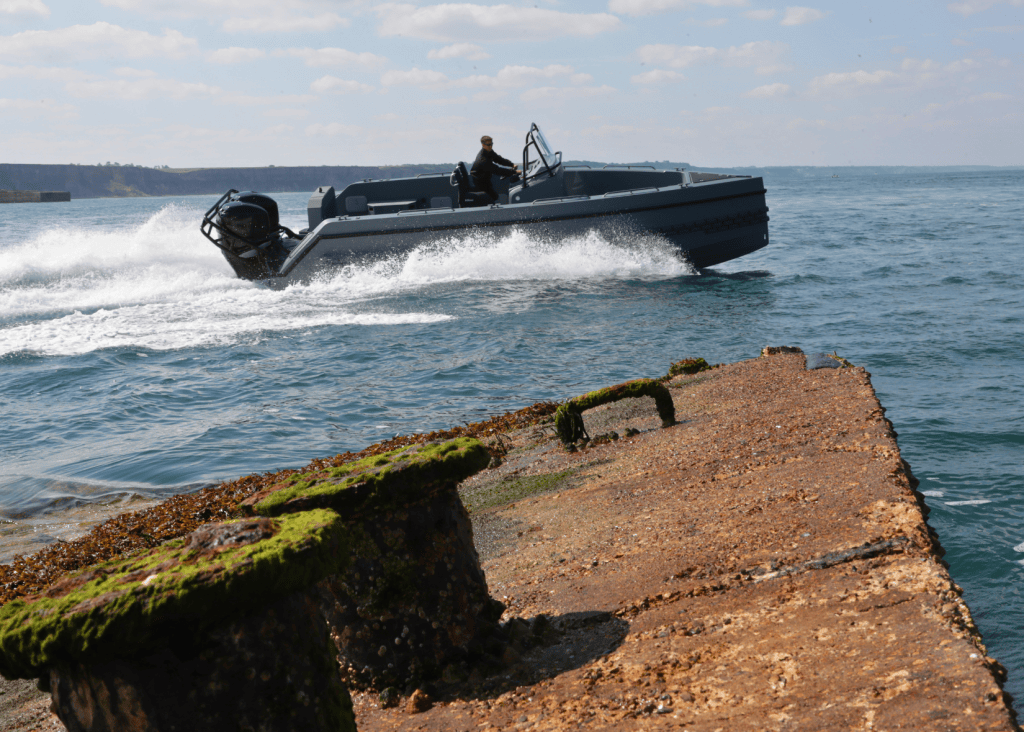
Traditional boats perform efficiently in open water. However, their operational effectiveness rapidly decreases when missions require direct interaction with the shoreline or difficult coastal terrain. In emergency scenarios, operators often face several recurring constraints:
- Lack of accessible launch infrastructure
- Shallow or unstable coastal environments
- Inability to land directly on beaches or rocky shorelines
- Delayed deployment times
- Restricted access to flooded or isolated areas
- Dependence on support vehicles and logistics chains
These limitations create operational gaps during missions where mobility, speed and autonomy are critical.
This innovation transformed the boating experience. It offered unprecedented freedom, flexibility, and autonomy, allowing users to reach remote coastlines and operate independently from traditional maritime constraints.
WHY AMPHIBIOUS PLATFORMS CHANGE THE GAME
Unlike conventional marine craft, an Iguana Pro amphibious platform is designed to remove the physical barrier between land and sea.
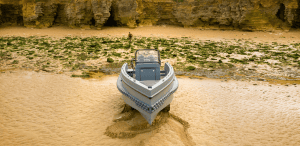
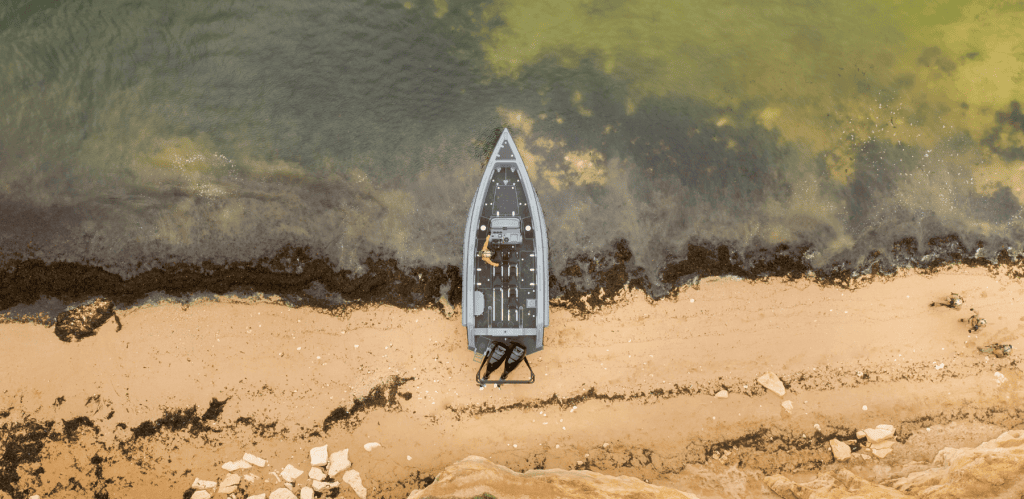
Iguana Pro was specifically engineered to operate where traditional boats reach their limits. Its patented tracked mobility system allows seamless transition from land to water without requiring ports, ramps or dedicated infrastructure.
Operators can deploy directly from:
- Beaches
- Mud and marsh terrain
- Rocky coastlines
- Flooded urban zones
- Riverbanks
- Remote coastal areas
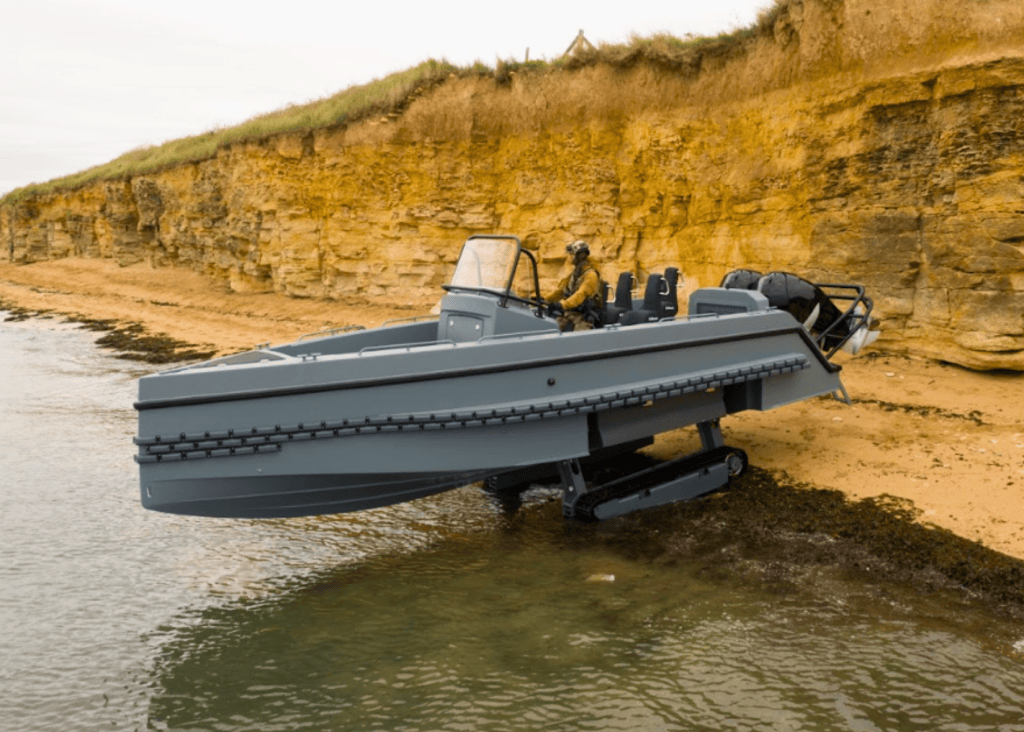
This capability fundamentally changes deployment dynamics for rescue, defense and security missions.
Instead of transporting a boat to a launch site, deploying it into the water and recovering it afterward, operators gain a fully autonomous amphibious platform capable of moving independently between operational environments.
SPEED, MOBILITY AND RAPID DEPLOYMENT
Operational responsiveness is critical during rescue and security missions.
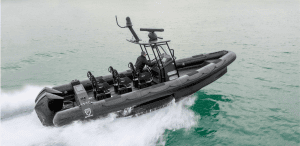
As an Iguana Pro amphibious rescue boat and coastal security platform, Iguana Pro combines high-speed maritime performance with all-terrain mobility. Capable of speeds exceeding 50 knots on water, it enables rapid intervention while maintaining direct shoreline accessibility.
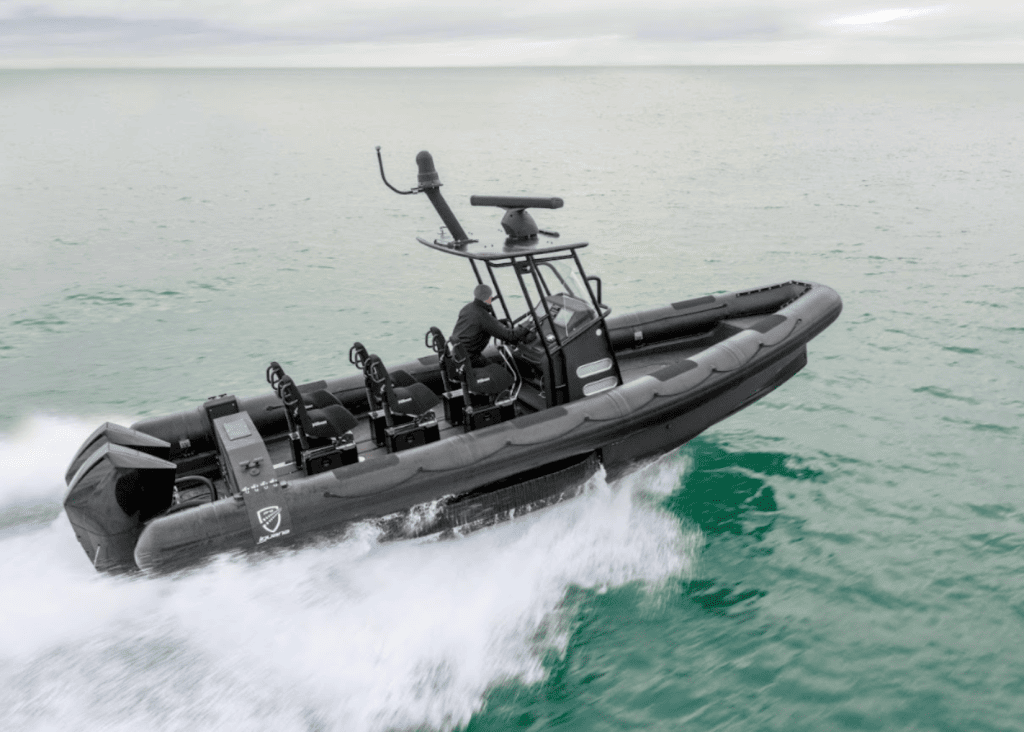
This combination provides several operational advantages:
- Faster mission deployment
- Reduced logistical dependency
Increased coastal access - Enhanced operational autonomy
- Greater flexibility in dynamic environment
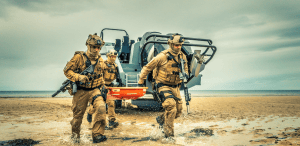
For rescue agencies, this means reaching isolated populations faster during floods or coastal disasters. For military and government operators, it enables discreet insertion, shoreline patrol and rapid response capabilities across challenging littoral terrain.
REDEFINING COASTAL AND AMPHIBIOUS OPERATIONS
The operational landscape is changing.
Climate-related disasters, evolving maritime threats and increasingly complex coastal missions are exposing the limitations of conventional marine platforms. The need for mobility across both land and sea is no longer a niche capability; it is becoming an operational necessity.
As an Iguana Pro amphibious military craft and professional response platform, Iguana Pro was developed precisely to address these emerging challenges.
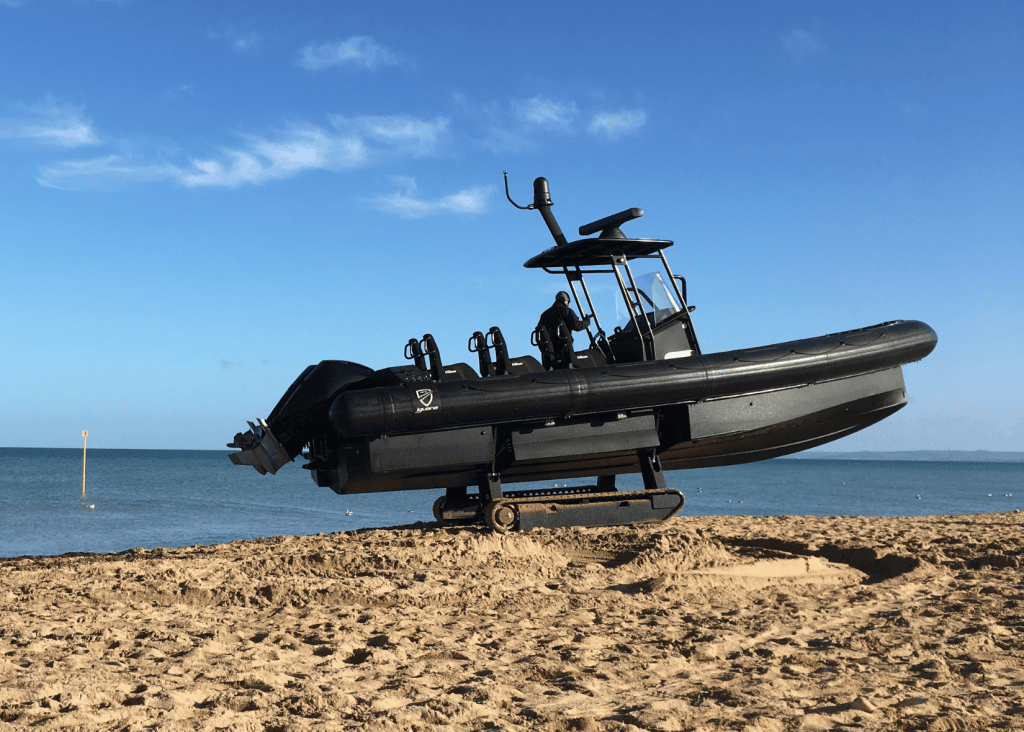
By eliminating dependence on traditional launch infrastructure and enabling direct coastal access, amphibious mobility expands what operators can achieve in the field.
Because in modern coastal operations, the mission rarely starts at the dock.