



For decades, maritime security strategies have focused heavily on one capability: speed. Fast interceptor boats were designed to pursue threats quickly at sea, reduce response time, and improve offshore interception capability. But modern security missions have evolved far beyond traditional open-water pursuit operations.
Today’s threats increasingly emerge in littoral environments, the complex transition zone between land and sea, where shallow waters, beaches, estuaries, marshes, and remote coastlines create major operational challenges.
THE LIMITS OF CONVENTIONAL BOATS
Traditional interceptor craft are optimized for speed on water, but they remain dependent on ports, ramps and sufficient water depth to deploy efficiently. This dependency creates critical operational gaps during coastal missions.
Smuggling networks, infiltration routes and asymmetric maritime threats increasingly exploit isolated shorelines and infrastructure-denied areas where conventional patrol boats struggle to access rapidly.
In these environments, speed alone is not enough.
The challenge is no longer simply intercepting a target at sea; it is reaching the operational zone quickly and maintaining mobility once there.
AMPHIBIOUS MOBILITY AS A TACTICAL ADVANTAGE
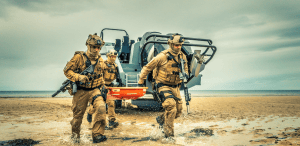
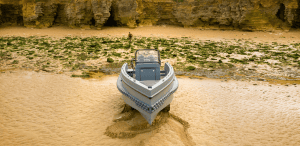
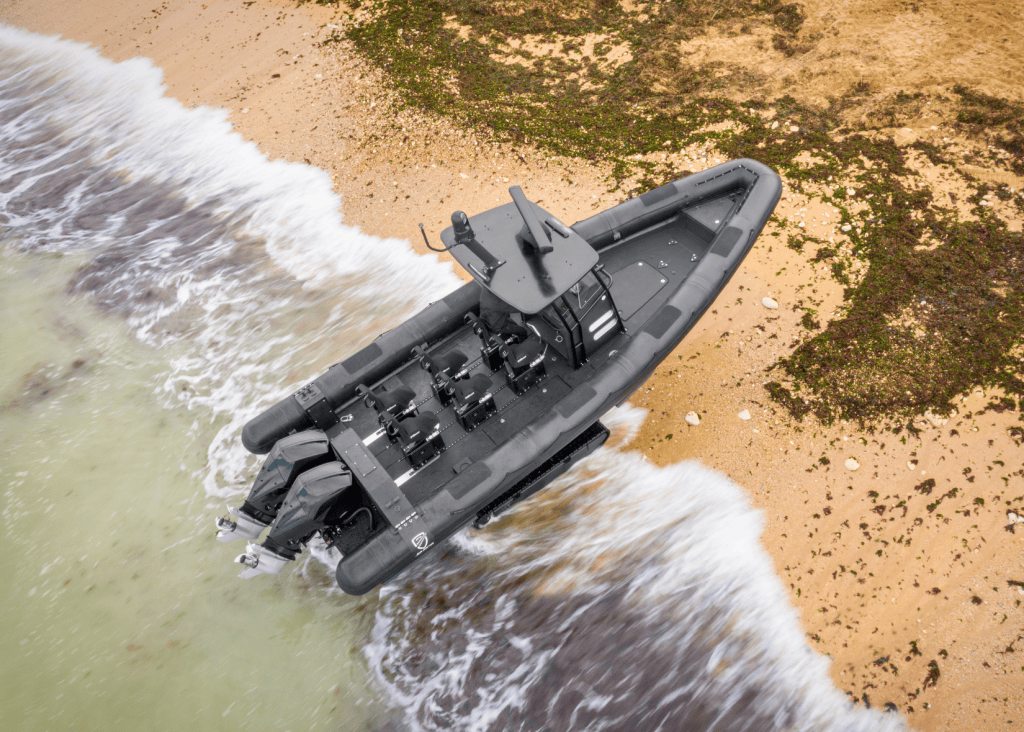
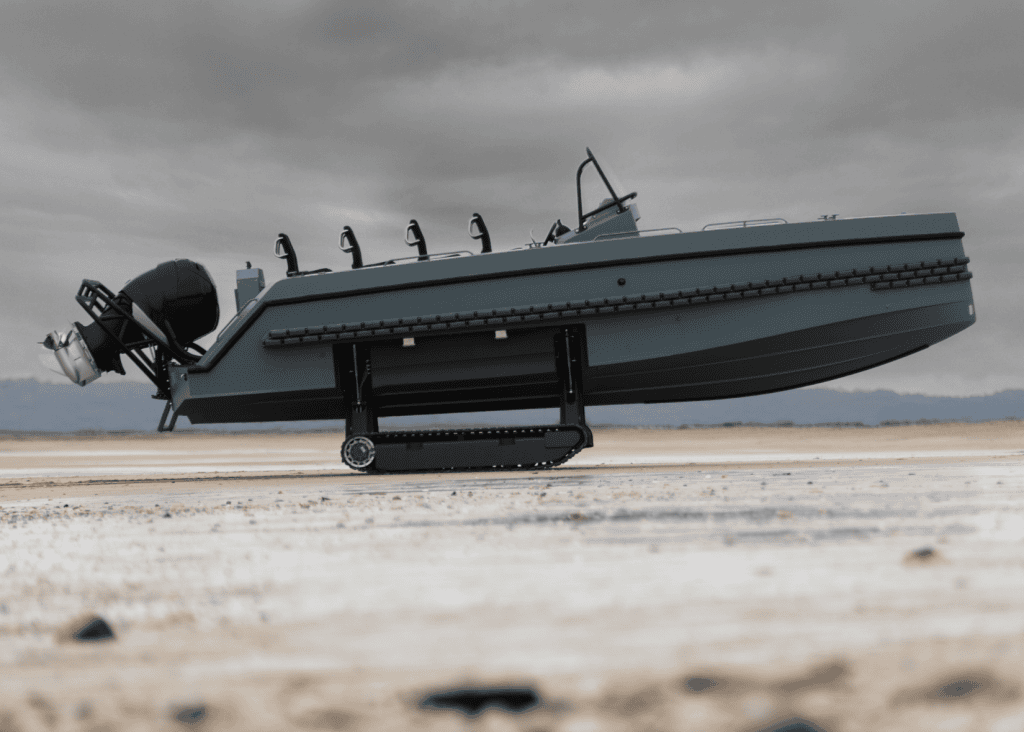
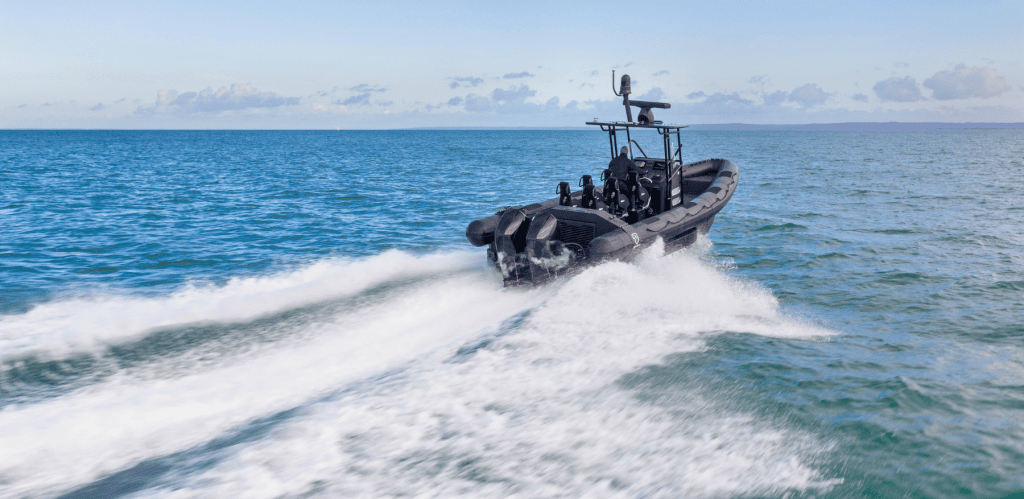
This is where Iguana Pro introduces a different operational approach. Combining high-speed maritime performance with amphibious access, Iguana Pro operates as both a fast interceptor boat and an autonomous coastal mobility platform. Its patented tracked amphibious system allows direct deployment from beaches, mudflats, rocky shorelines and remote coastal terrain without requiring launch infrastructure.
Operators can transition seamlessly from land to sea, transforming virtually any shoreline into an operational launch point
SPEED COMBINED WITH OPERATIONAL ACCESS
With speeds exceeding 50 knots, Iguana Pro delivers the rapid response capability expected from a modern military patrol boat while adding a decisive operational advantage: infrastructure independence.
This amphibious capability allows security forces to:
- Deploy faster in remote coastal areas
- Access isolated littoral zones
- Conduct direct beach landings
- Improve shoreline interception capability
- Maintain mobility across difficult terrain
Modern maritime security increasingly depends on flexibility, rapid deployment and coastal access.
As operational environments become more fragmented and unpredictable, amphibious mobility is becoming a critical force multiplier for military, coast guard and governmental agencies.
Because in modern littoral operations, the fastest interceptor is only effective if it can reach the mission zone in time.