



Coastal security challenges are evolving rapidly. Across the world, governments and maritime agencies are facing increasing pressure to monitor remote shorelines, shallow coastal zones and infrastructure-denied areas that conventional patrol assets struggle to access.
THE APPEARANCE OF A GROWING THREAT
Illegal trafficking, unauthorized infiltration, smuggling operations and maritime border threats increasingly exploit these operational blind spots. Mangroves, estuaries, mudflats, river mouths and shallow coastal waters create complex environments where traditional patrol boats often lose mobility and operational effectiveness. Most conventional maritime platforms remain dependent on ports, ramps and sufficient water depth to operate efficiently. As a result, large sections of coastline remain difficult to monitor continuously, particularly in remote or undeveloped regions.
This growing operational gap is redefining the role of amphibious mobility in modern coastal security.
ONE SOLUTION : IGUANA PRO
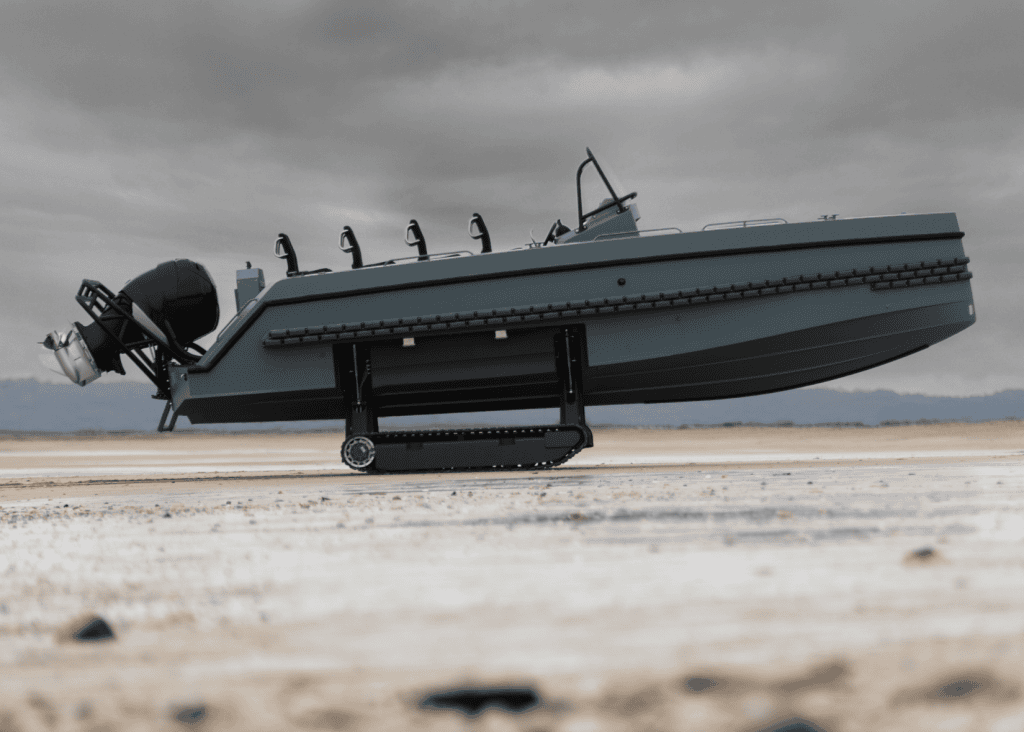
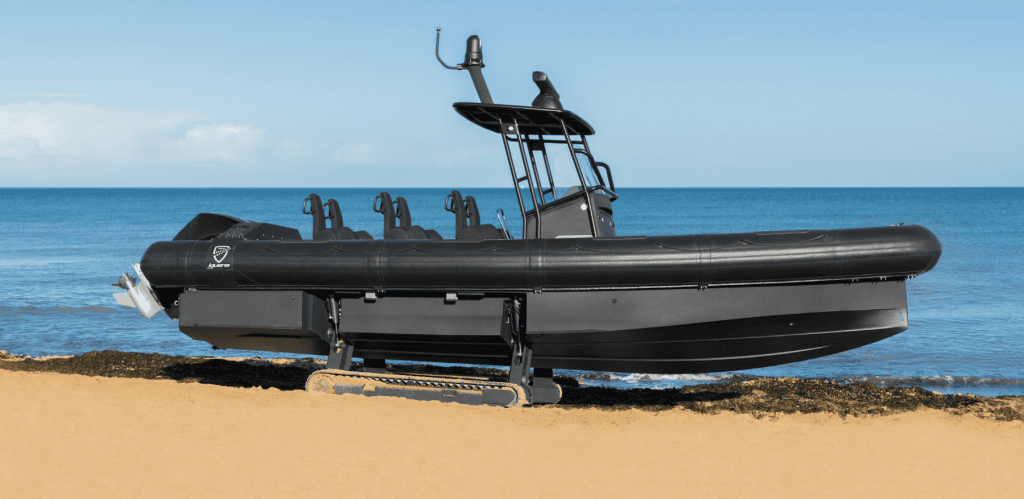
Designed specifically for littoral and near-shore operations, Iguana Pro combines the capabilities of a high-speed coastal surveillance boat with autonomous land mobility.
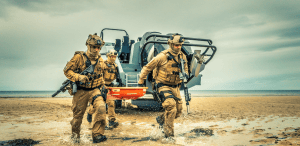
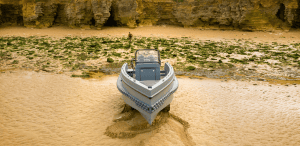
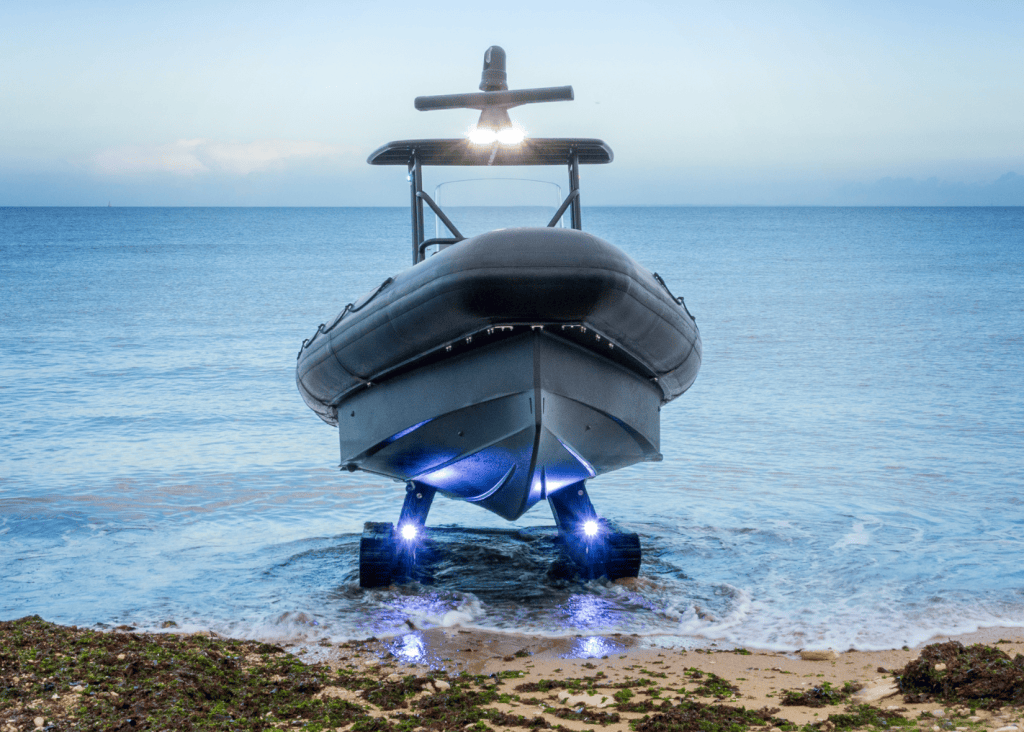
Its patented tracked amphibious system enables operators to launch directly from beaches, rocky coastlines, marshes or shallow environments without requiring dedicated infrastructure.
This transforms virtually any shoreline into an operational deployment point.
AMPHIBIOUS MOBILITY CAPABILITIES
With speeds exceeding 50 knots on water and all-terrain mobility on land, Iguana Pro allows border security forces, coast guards and governmental agencies to patrol and access areas traditionally considered unreachable by standard patrol vessels. The platform’s shallow-water capability and direct shoreline access also improve tactical flexibility during interception missions and rapid response operations. Security teams can approach sensitive coastal zones more discreetly, reduce deployment time and maintain operational presence across challenging terrain.
As maritime threats become more decentralized and adaptive, surveillance strategies must evolve accordingly.
Modern coastal security is no longer limited to deep-water patrols. It increasingly depends on the ability to operate precisely where land and sea intersect, the environment where conventional patrol boats reach their operational limits.