



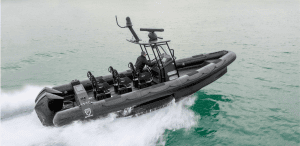
HOW IGUANA’S PATENTED AMPHIBIOUS MOBILITY SYSTEM WORKS?

For decades, conventional boats have shared the same operational limitation: they perform on water, but stop at the shoreline. Iguana was engineered to remove that barrier entirely.

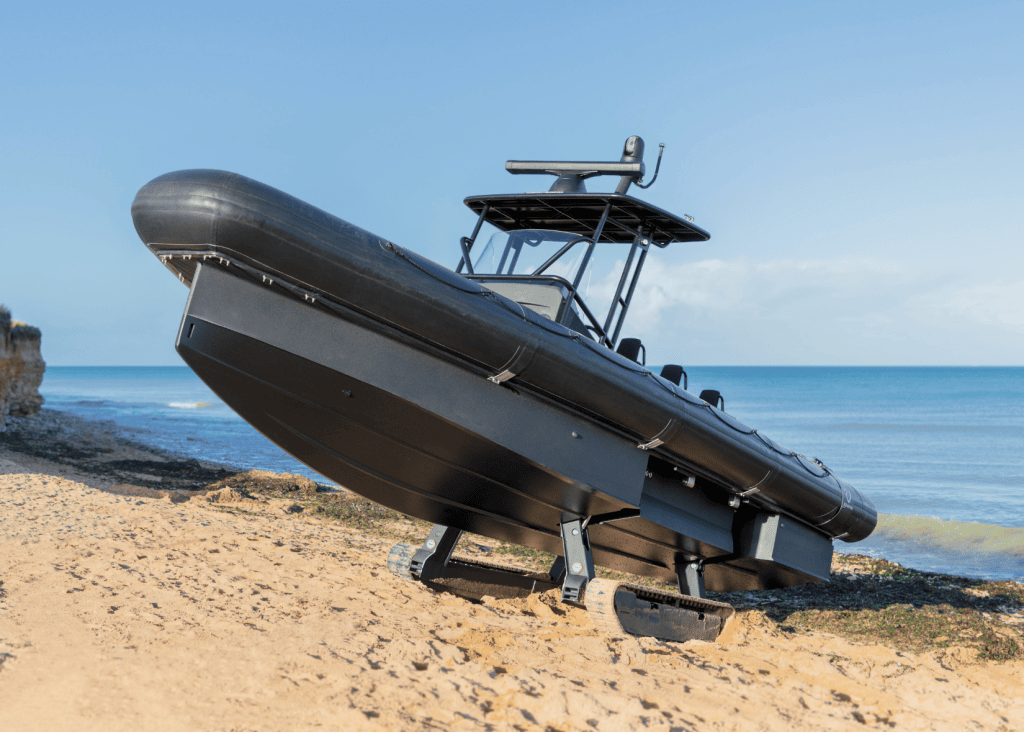
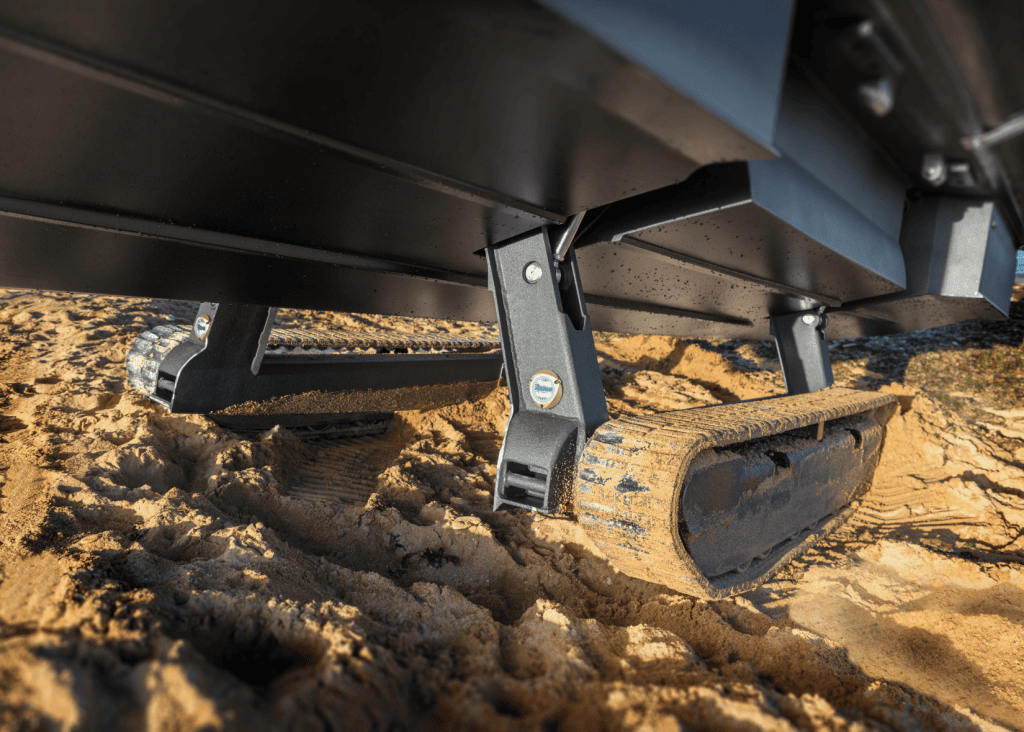
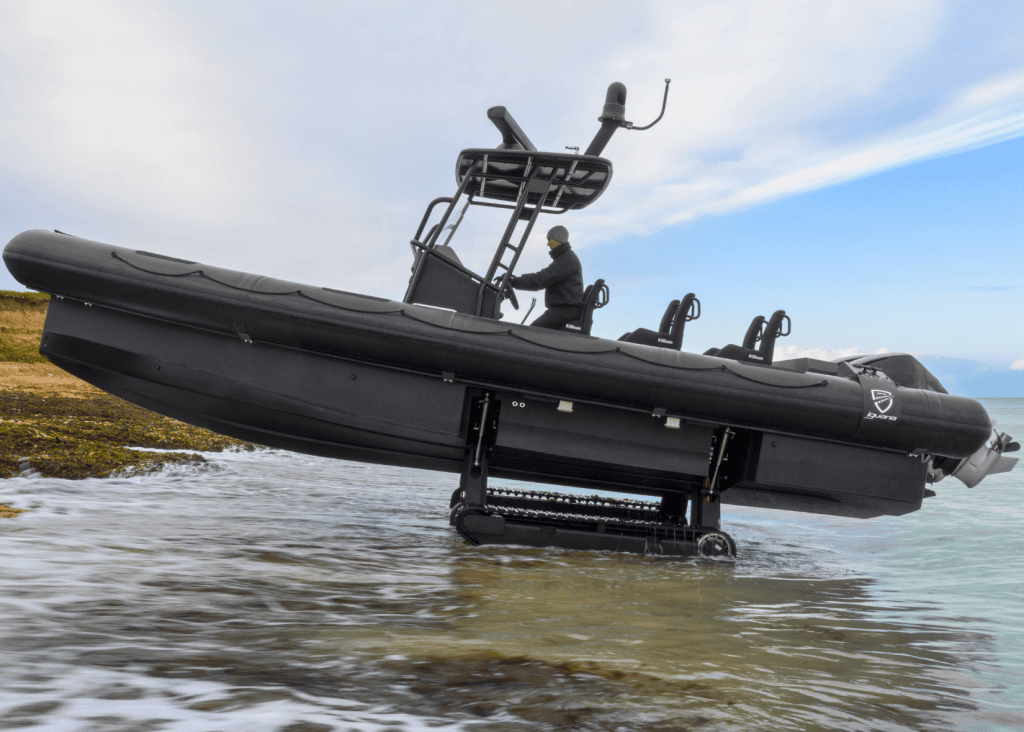
At the core of Iguana Pro is a patented amphibious mobility system combining high-speed marine performance with all-terrain coastal access. Its retractable hydraulic tracks allow operators to move seamlessly from road to shoreline, through surf, and directly onto land without relying on ports, ramps, or launch infrastructure.


IMS - IGUANA MOBILITY SYSTEM

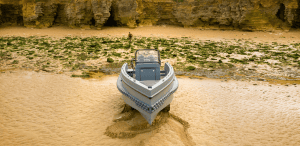
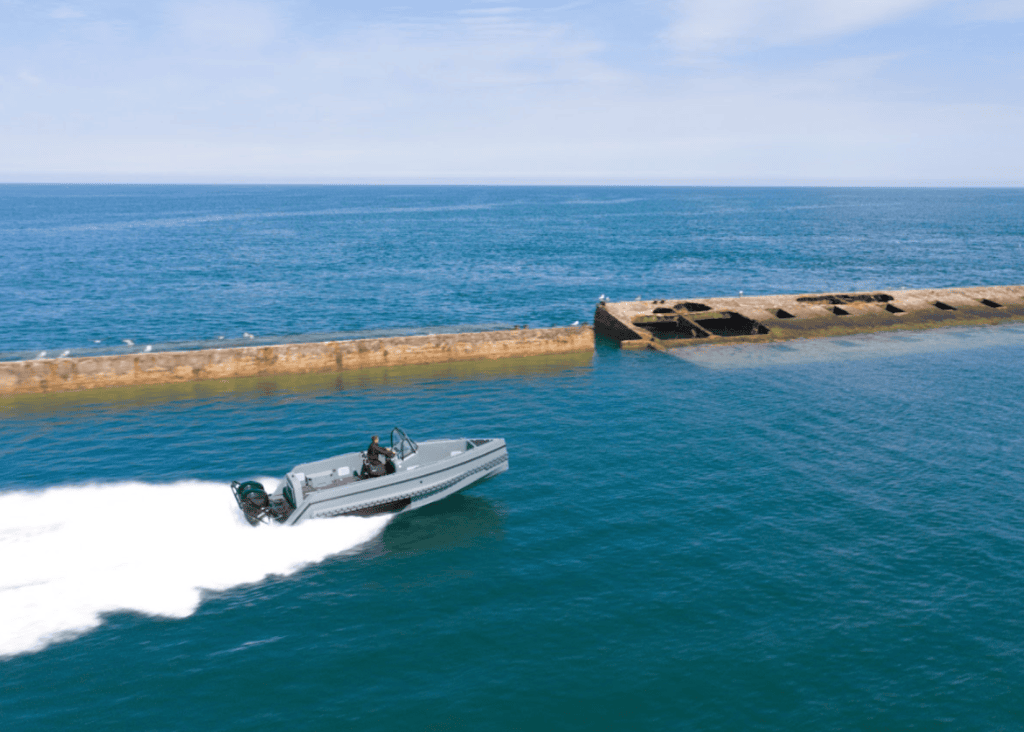
In navigation mode, the tracks retract fully into the hull to preserve hydrodynamic efficiency and maximize speed. Once approaching shore, the system deploys within seconds, transforming the vessel into a fully amphibious platform capable of operating across beaches, mud, marshes, rocks and steep inclines up to 40%.

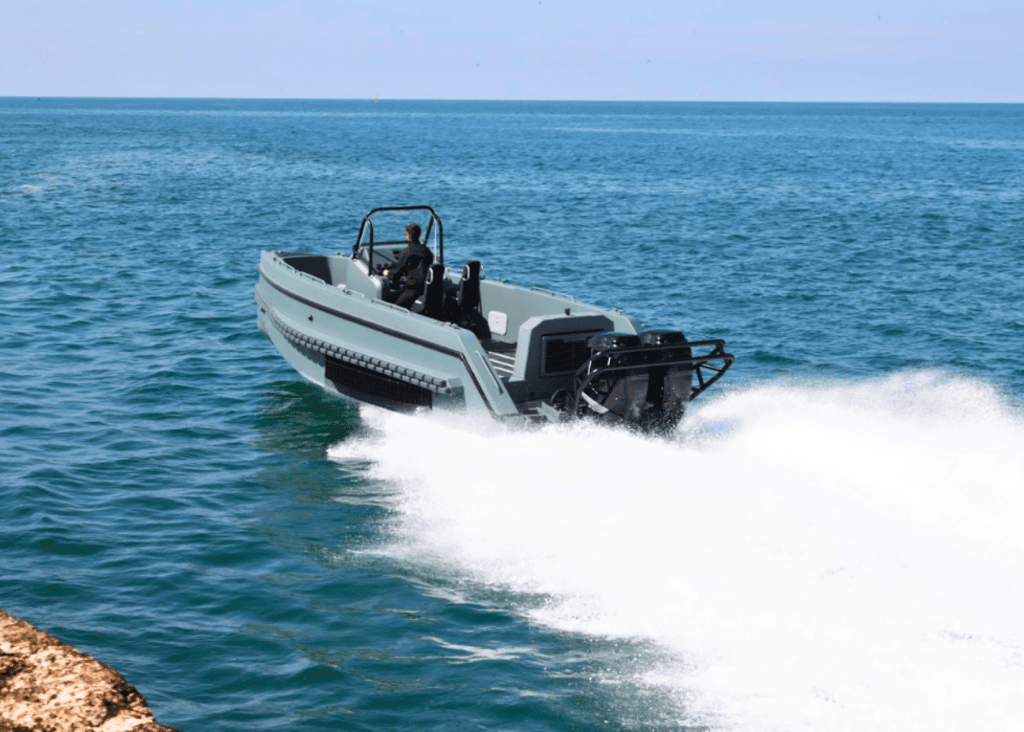
The vessel’s stability is built around a low center of gravity and a wave-piercing carbon hull engineered for rough maritime conditions. Unlike conventional rigid hulls that slam against waves, the Iguana hull is designed to cut through surf more efficiently, improving control during wave landings and coastal approaches.

For land mobility, the Kevlar-reinforced tracks provide exceptional traction and durability in abrasive coastal environments. They are specifically engineered to withstand repeated exposure to sand, rocks, debris and unstable terrain during demanding rescue or military missions.

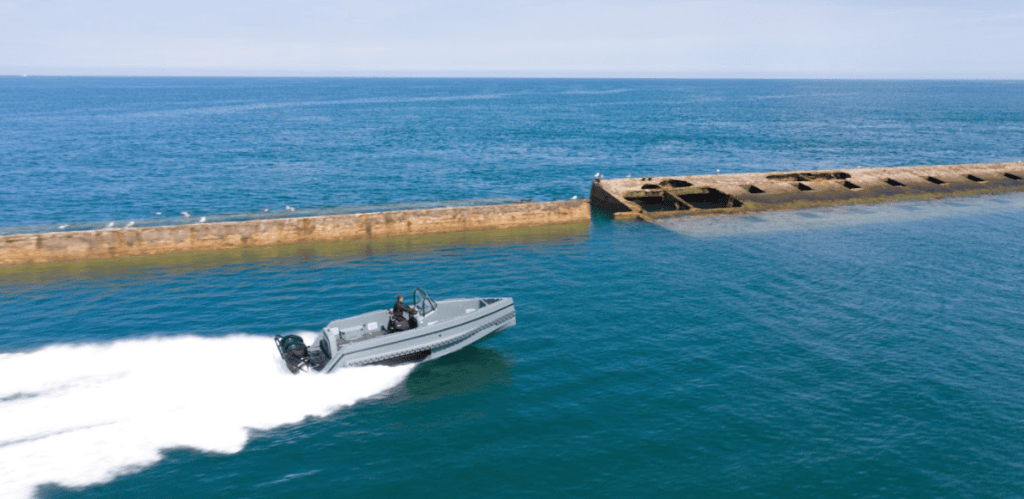
Constructed from lightweight carbon fiber, the hull delivers both rigidity and reduced weight, allowing Iguana Pro to reach speeds above 55 knots while maintaining maneuverability and operational stability.

A TECHNOLOGY FROM MILITARY HISTORY

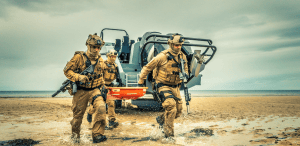
Amphibious operations have shaped military history for generations. From the beaches of Normandy Landings to today’s coastal security missions, controlling the transition zone between land and sea has always represented a decisive operational advantage. The ability to land forces rapidly, move across hostile shorelines and maintain mobility in unpredictable coastal terrain remains at the heart of expeditionary warfare.

The ongoing geopolitical climate has intensified the need for amphibious operations.

The objective is no longer simply reaching the shore. It is maintaining operational freedom once there.

From Normandy to modern littoral warfare, the mission remains the same: overcoming the barrier between land and sea. The technology, however, has evolved dramatically.

Related articles

COASTAL SURVEILLANCE GAPS: THE GROWING CHALLENGE FOR GOVERNMENTS

Coastal security challenges are evolving rapidly. Across the world, governments and maritime agencies are facing increasing pressure to monitor remote shorelines, shallow coastal zones and infrastructure-denied areas that conventional patrol assets struggle to access. THE APPEARANCE OF A GROWING THREAT Illegal trafficking, unauthorized infiltration, smuggling

THE FUTURE OF FLOOD RESCUE IS AMPHIBIOUS

Climate-related disasters are increasing worldwide, creating new operational challenges for rescue teams and civil protection agencies. Flooded urban environments, debris-filled streets, and shallow water zones often make conventional rescue boats difficult to deploy and operate efficiently. Most traditional rescue vessels depend on ramps, trailers, or

WHY CONVENTIONAL BOATS FAIL IN THE TRANSITION ZONE BETWEEN LAND AND SEA

From coastal security missions and border surveillance to disaster response and rescue operations, today’s operators are required to work in environments where conventional marine platforms were never designed to perform efficiently. Beaches, flooded urban areas, marshlands, estuaries, rocky coastlines, and infrastructure-denied zones have become critical